Wednesday, 4 April 2012

H.G. Wells - The New Accelerator


Pass: bbc4free.blogspot.com


A BBC 7 commission read by Robert Bathurst.


The acclaimed physiologist, Professor Gibberne, is on the verge of a making a discovery that will revolutionise human life by creating a stimulant to speed up both the body and mind...


One episode of approximately 30 minutes.


First broadcast 21/1/2006 on BBC7.


oh also...this is the-


Better drink heavily on this momentous occasion!

The Tibetan Book Of The Dead


Pass: bbc4free.blogspot.com

In this scripture of Tibetan Buddhism—traditionally read aloud to the dying to help them attain liberation—death and rebirth are seen as a process that provides an opportunity to recognize the true nature of mind. This audio program, read by the actor Richard Gere, allows you to experience this timeless text in the traditional way. It will be of interest to people concerned with death and dying, as well as to all those who seek spiritual insight into the myriad changes of everyday life.

Total length: 2 hours, 49 minutes

Tuesday, 3 April 2012

George Carlin - Class Clown


Pass: bbc4free.blogspot.com

Class Clown is the third comedy album released by American comedian George Carlin. It was recorded May 27, 1972 at the Santa Monica Civic Auditorium in Santa Monica, California, and released in September.


At the time he was relatively well-known for tame satirical routines about the entertainment industry. His previous album FM & AM released the same year, showed that he was already drifting towards counter-culture icon, but Class Clown proved a landmark. Besides musings about his youth, the album featured strongly directed remarks against the Vietnam War and his attachment to taboo topics. The album contains "Seven Words You Can Never Say on Television", which became the focus of government harassment in the year that followed, and, perhaps not coincidentally, Carlin's most famous calling card. Carlin would continue to explore the use of profanity for the rest of his career. Apart from this segment, Class Clown is Carlin's only profanity-free album since 1971.

Gotta love Carlin.

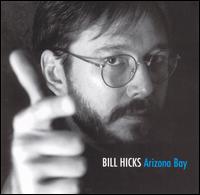
Bill Hicks - Arizona Bay


Download Here

Pass: bbc4free.blogspot.com


Arizona Bay is an album by comedian Bill Hicks, posthumously released in 1997. It was released alongside Rant in E-Minor, marking three years since his death. The album's title refers to the hope that Los Angeles will one day fall into the ocean due to a major earthquake. Hicks contends that the world will be better off in L.A.'s absence:
Ahhh, it's gone, it's gone, it's gone...All the shitty shows are gone, all the idiots screaming in the fucking wind are dead, I love it...leaving nothing but a cool, beautiful serenity called Arizona Bay. That's right, when L.A. falls in the fucking ocean and is flushed away, all it will leave is Arizona Bay.

Several of Hicks's albums are unique in that they feature background music, meant to enhance the album's mood. Such additions were made well after the initial recordings and are the product of Hicks's own musicianship.

According to Kevin Booth, in the BBC documentary Dark Poet, it was during the early recording sessions for Arizona Bay, around Christmas 1992, that Hicks first started suffering from the pains in his side, which would later be diagnosed as pancreatic cancer. Upon learning that he had developed cancer, Hicks used his time to mix music into Rant in E-Minor and Arizona Bay, calling it his Dark Side of the Moon.


Bill Hicks - Guitar, Vocals
Kevin Booth - Bass, Keyboards, Percussion, Producer

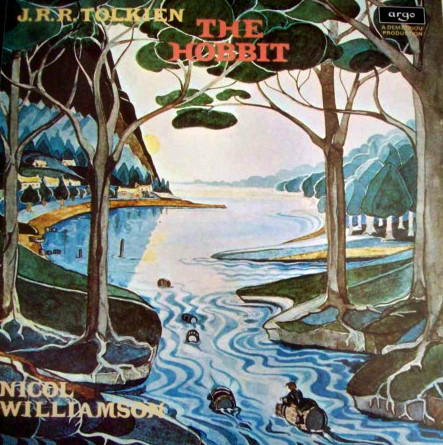
J.R.R. Tolkien - The Hobbit (1974)


Pass: bbc4free.blogspot.com

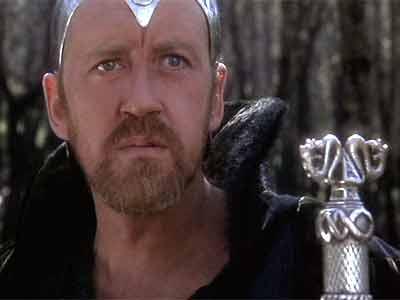
Out-of-print audiobook adaptation which was authorized by professor Tolkien himself, this was originally put out in 1974 as a boxed set of LPs. In my view, this is pretty much the best adaptation of The Hobbit ever, rivaling even the terrific animated film adaptation. It owes its greatness to the wonderful music and simply amazing voice work of Nicol Williamson, who may be better known to some as Merlin from the film Excalibur. If there were a Criterion Collection for audiobooks, this would surely be be one of the first titles.

"In a hole in the ground there lived a hobbit. Not a nasty, dirty, wet hole, filled with the ends of worms and an oozy smell, nor yet a dry, bare, sandy hole with nothing in it to sit down on or to eat: it was a hobbit-hole, and that means comfort."

Saturday, 10 March 2012

Alan Watts - Myth and Religion - Audiobook


Pass: bbc4free.blogspot.com


Alan Watts, "Myth and Religion (Audiobook)"

Electronic University Publishing | 1996 | ISBN: 1882435214 | Audio CD | mp3 | 145 MB

Summary: from Iowa

Rating: 5


This is an awesome book. I was introduced to Alan Watts' work about a year ago and I have throughly enjoyed his exploration of the eastern and western religious ideas. I was born and raised in both the Hindu and Christian triditions, and it was difficult for me to compare the two religions until Alan Watts came along.

Chapters:

Not What Should Be, But What Is!

Spiritual Authority

Jesus: His Religion?

Democracy in Heaven

Image of Man

Sex in the Church

_______________________


Summary: The Christianity Trap

Rating: 5


Alan Watts lectured to live audiences during the 1960's and1970's. His talks reveal his view of Christianity and religion and leaves the listener with a keen sense that "I too, am a son of God". With this insight the listener is set free to experience life in its fullest. Alan Watts masterful description of Christianity through a Buddhist point of view is truely illuminating.

BBC Radio Stoke - On the Cut


Pass: bbc4free.blogspot.com


For canal enthusiasts, there is nothing better than hearing about the colourful history of the waterways. Thanks to the work of one North Staffordshire radio producer, Arthur Wood, they can listen to the authentic voices.

Back in 1985, work was finally completed in the Radio Stoke studios on a huge project.
It's a project which would have challenged today's leading national broadcasters, even with the cash at their disposal.
But when you think it was essentially the work of just one radio producer, working on the sort of tiny budget provided on BBC local radio, it was an amazing feat.

Arthur Wood, whose 'day-job' was as Education Producer at Radio Stoke, had managed to record some one hundred hours of interviews out on location, and then edited them all, distilling them all down to ten half-hour documentary programmes.
It is a staggering achievement - and even more when you consider that Arthur also wrote the narrative script (and voiced it himself) and even wrote the music! Arthur was of course a distinguished jazz piano-player.

Arthur, who died in 2005, was a canals-man.
Raised in North Staffordshire, he was familiar with the many waterways that run through the area, and even chose to settle in a house near to the Cauldon. He had his own boat.
However it was those who worked on the canals that fascinated him the most; and he decided to record memories of a disappearing way of life before they were finally lost for ever - and so began the "On The Cut" project. "Cut" is of course the local dialect word for a canal.
Arthur described the opus as: "An account of day-to-day life on commercial waterways by the men and women who worked on, and alongside, some of the main canals of England in the earlier years of the 20th century."

The programmes are:

Part 1 Homes & Boats
Part 2 Narrow Boats & Broad Boats
Part 3 Carrying Cargoes
Part 4 Horses & Motors
Part 5 Boats On The Move
Part 6 Forging Ahead
Part 7 A Tough Life
Part 8 On The Bank
Part 9 Growing Up
Part 10 End of An Era

BBC R3 - Louis MacNeice's 'Christopher Columbus'


Pass: bbc4free.blogspot.com


First perfomed in 1942 to celebrate the 450th anniversary of Columbus'
first great voyage of discovery. This production made and broadcast
to celebrate the 500th anniversary. Far less theatrical/more natural
than the original production.

The music is intrusive up front, but after about five minutes settles
down and supports - rather than competes with - the action.

Music by BBC Symphony Orchestra

BBC R4 - Tarzan: Lord of the Jungle


Pass: bbc4free.blogspot.com


A hundred years ago Edgar Rice Burroughs created the character of Tarzan who quickly became a global sensation - when the books were first adapted for the big screen in 1918, the resulting film was one of the first ever to take over a million dollars at the box office. Way ahead of his time, Burroughs ignored the advice of business 'experts' who told him not to roll out the character across different formats. By doing so, he was one of the true pioneers of the multi-media franchises that have since become the norm.

Tarzan himself has been as troubling as he has been popular - the different characterisations that have appeared in the hundreds of books, films, radio shows, comic books, cartoons etc., make it very hard to pinpoint one single, authentic character. Some critics have derided him for his affirmation of white, colonial assumptions, while others have championed his eco-warrior credentials. One thing is for sure - with a range of new books and films appearing, the character of Tarzan has lost little of his original appeal. John Waite talks with, among others, James Sullos of ERB Inc., Desmond Morris to find out about the plausibility of the notion of a baby being raised by apes, and cultural historian Jeffrey Richards.

BBC R4 - The Lobotomists


Pass: bbc4free.blogspot.com


2011 marks a 75th anniversary that many would prefer to forget: of the first lobotomy in the US. It was performed by an ambitious young American neurologist called Walter Freeman. Over his career, Freeman went on to perform perhaps 3,000 lobotomies, on both adults and later on children. He often performed 10 procedures or more a day. Perhaps 40,000 patients in the US were lobotomised during the heyday of the operation - and an estimated 17,000 more in the UK.

This programme tells the story of three key figures in the strange history of lobotomy - and for the first time explores the popularity of lobotomy in the UK in detail.

The story starts in 1935 with a Portuguese doctor called Egas Moniz, who pioneered a radical surgical procedure on the brain. Moniz was a remarkably distinguished figure, a diplomat as well as a doctor, who had invented the technique of cerebral angiography which is still used today. With very little evidence, he speculated that cutting the links between the frontal lobes and the rest of the brain would relieve symptoms of mental disorder. His results were seized on with enthusiasm the following year by Freeman, the grandson of one of the US's most famous surgeons. Freeman was a relentless self-publicist and managed to convince many of the efficacy of his procedure. Freeman's promotion of lobotomy as a cure for mental illness was instrumental in Moniz receiving the Nobel Prize for medicine. The operation was also taken up by the most celebrated British neurosurgeon of the time, Sir Wylie McKissock. Like Freeman, he travelled the country, performing numerous lobotomies in single sessions. For this programme, Hugh Levinson interviews McKissock's former colleagues and hears in detail about how he performed several thousand lobotomies, or leucotomies as they were known in the UK.

The operations were successful in subduing disturbed patients, usually with immediate positive results, which sometimes persisted. Freeman argued that this was better than letting mentally ill patients rot away for decades in squalid institutions, untreated and unattended. However, further monitoring showed very mixed results. While a significant number of patients with affective disorders seemed to become better, a large proportion were unaffected or got worse. Many patients reverted to a child-like state. A significant proportion died as a direct result of the procedure.

In the 1940s, Freeman pushed on, devising a faster and cheaper procedure. He hammered an icepick (originally taken from his home fridge) through the top of each eye socket, directly into the skull. He then swept the icepick from side to side, destroying the connections to the frontal lobes. Other surgeons were horrified by the random nature of the operation. He recorded with satisfaction in his diary when attending doctors ended up vomiting or fainting. His closest aide refused to participate. By the late 1950s the lobotomy craze was over, and only a very few continued to be performed in special cases. In the late 1960s, Freeman was banned from operating.

The stories of Moniz, Freeman and McKissock - all commanding and dynamic figures - raise profound questions about our ideas both of mental health and science. Is a patient "cured" just because he becomes subdued? And how come the lobotomy became so popular despite the lack of evidence of its efficacy - and the rapid dissemination of evidence of its potential for harm? To what extent is science independent of powerful personalities, economic considerations and media pressure?

Jerome K Jerome - Three Men In A Boat


Pass: bbc4free.blogspot.com

Episode 1: 
------------
4 Extra Debut. George, Harris and J holiday on the River Thames from Kingston to Oxford - with Montmorency the dog. Stars Jeremy Nicholas.

Episode 2:
------------
A tin of pineapple takes on a starring role as the story of the Thames holiday continues.

Episode 3:
------------
As the friends conclude their Thames adventure, they encounter a tragedy and some nasty weather.


Duration: 81 Mins (Each episode 27 Mins)

Cormack McCarthy - No Country For Old Men


Pass: bbc4free.blogspot.com


In 1980 southwest Texas, Llewelyn Moss, hunting antelope near the Rio Grande, stumbles across several dead men, a bunch of heroin and $2.4 million in cash.

The bulk of the novel is a gripping man-on-the-run sequence relayed in terse, masterful prose as Moss, who's taken the money, tries to evade Wells, an ex?Special Forces agent employed by a powerful cartel, and Chigurh, an icy psychopathic murderer armed with a cattle gun and a dangerous philosophy of justice. 

Also concerned about Moss's whereabouts is Sheriff Bell, an aging lawman struggling with his sense that there's a new breed of man (embodied in Chigurh) whose destructive power he simply cannot match. In a series of thoughtful first-person passages interspersed throughout, Sheriff Bell laments the changing world, wrestles with an uncomfortable memory from his service in WWII and?a soft ray of light in a book so steeped in bloodshed?rejoices in the great good fortune of his marriage. 

While the action of the novel thrills, it's the sensitivity and wisdom of Sheriff Bell that makes the book a profound meditation on the battle between good and evil and the roles choice and chance play in the shaping of a life.