Showing posts with label History. Show all posts

Saturday, 9 March 2013

[BBC Radio 4] - Grimm Thoughts


Pass: bbc4free.blogspot.com


When the Grimm brothers first published their Children's and Household Tales in 1812, in a scholarly effort to collate a national identity of the people, it was the beginning of an obsessive project of two intricately interwoven lifetimes.

To mark the bicentenary of the first edition, writer and mythographer Marina Warner explores the many compelling and often controversial aspects of the tales in a 10-part series, revealing new insights into the stories we think we know so well, and introducing us to the charms and challenges of those that we don't.

Alongside beautifully narrated extracts from the tales themselves, renowned academics and artists who work closely with the Grimm's rich heritage add to our understanding of these deceptively complex stories.


Episode 1 
(17 Dec 2012)

In the opening episode, we are introduced to the Grimm brothers themselves and the context in which they collected these tales, in parallel with the story of The Frog King - a tale of transformation and sexual favour that has opened the collection since it was first published and has played a central role in the Romantic attraction to the tradition of Volkspoesie.


Episode 2 
(18 Dec 2012)

In the second episode, Marina traces the tales right back to their ancient origins, hoping to answer the question of why we find parallels with the Grimms' stories in texts across cultures throughout time. Her search centres on Cinderella as she visits the tale's oldest known incarnation - an ancient Egyptian manuscript that tells the rags-to-riches story of the 'rosy-cheeked' Rhodopis and was a (perhaps fittingly) precious find, recovered from a rubbish dump.


Episode 3 
(19 Dec 2012)

In the third episode we enter the magical worlds of the fairy tale, immersing ourselves in the spellbound transformations, landscapes and objects that have charmed generations. When magic rubs against the grain of reality and the impossible is naturalised, the stories' unique character comes alive.


Episode 4 
(20 Dec 2012)

In the fourth episode, Marina tells the latent truth from the familiar fiction in the tales, identifying the real people and places that some believe to have inspired the Grimms brothers' collection. Was Bluebeard inspired by the real-life serial killer Giles de Rais, a 15th century French lord who served under Joan of Arc? Was Snow White based on truth? Leading academics discuss what these parallels tell us about the dormant human anxieties that transcend time and place.


Episode 5 
(21 Dec 2012)

In the fifth episode, we are drawn into the tales' rich history of illustration. These evocative stories have always stirred vivid images in the minds of artists, from the angular drawings of an early David Hockney to Dickens' Victorian illustrator George Cruikshank. Through these artists' impressions, we paint a new picture of the tales' vital contribution to the long tradition of visual storytelling.


Episode 6 
(24 Dec 2012)

In the sixth episode, we learn how these tales which had been lovingly collected to preserve a sense of national identity, were adopted and retold by the Nazis for the purposes of their brutal propaganda machine.

The humour is stripped from The Boy Who Set Out to Learn Fear, Red Riding Hood's gallant rescuer is given a swastika armband, and the dark undercurrents to the morals we might once have innocently accepted become uncomfortably apparent. We also explore the tangled post-war effort to reclaim the Grimms' tales for a more positive purpose, featuring discussion of The Singing Ringing Tree, the East German film that thrilled the young and old of German and British audiences alike.


Episode 7 
(25 Dec 2012)

Oedipal struggle in Cinderella; oral fixation in Hansel and Gretel; Little Red Riding Hood and attachment complex! Writers, psychologists and therapists have read deeper meanings into the Grimms' fairy tales. They have long been the subject of Freudian and Jungian interpretations and continue to be used by therapists and self-help authors today. In today's seventh episode of the series, we put the tales on the couch and discuss with psychoanalyst Susie Orbach their primal capacity to take on the unreal form of a dream.


Episode 8 
(26 Dec 2012)

Marina Warner explores the Grimm brothers' tales.


Episode 9 
(27 Dec 2012)

In the ninth episode, we break the silence on the tales' history of censorship. Throughout their lifetime the collection's innocent veneer has had its blood, violence, and sexual overtones softened or removed altogether by successive editors, each reacting to the particular sensitivities of the day, and even to the Grimms themselves.

Even so the stories have found as many champions as censors, most notably J.R.R. Tolkien in his defence of The Juniper Tree's brutal depiction of murder. Why is it that although the details that prove controversial have changed over time - each one a telling insight into the temperament of a society - the tales' fundamental power to shock remains unchanged?


Episode 10 
(28 Dec 2012)

In the final episode, with fairy tales enjoying a renaissance across film and literature, we look to the future of these tales that have haunted our past and the fundamental appeal of storytelling.

Considering Hansel and Gretel, a universal story of the joys and dangers of youth and innocence, we speak to playwright Lucy Kirkwood about her brand new National Theatre adaptation of the tale, and explore what the many contemporary takes on the Grimms' legacy might tell us about the modern world.

Tuesday, 19 February 2013

[BBC Archive on 4] - Embracing Idleness


The writer, Oliver Burkeman, wanders through the archives, thinking about the pros and cons of idleness. 

In these goal obsessed, triple-dip recession conscious days, the merest hint of idleness can send politicians and headline writers into a state of near apoplexy. Front-benchers from all political parties seem to be tripping over themselves in a bid to establish the supremacy of their moral devotion to the 'hard working families' and upstanding citizens of 'alarm clock Britain'. 

Oliver Burkeman steps back from the fray to unravel the complications of idleness and even discover some of its merits. As a non-idler who confesses to that feeling of smugness at having achieved tasks before breakfast time, Oliver nonetheless questions whether our target driven culture can ever bring any sense of contentment or happiness. The crux of the conflict seems to be that although idleness may be the dream, we spend most of our lives actively rejecting it. And so we admire, despise and envy the idler, all at once. 

Oliver consults a diverse range of characters from the archive to untangle some of the complications. These include Bagpuss, Rab C Nesbitt, Tony Hancock, Waynetta Slob and Ronald Reagan, who all help Oliver examine idleness and its relation to childhood, creativity, boredom, social class and subversion. There are also wonderful insights from 'real people'. There's the testimony of a schoolboy from 1960s Birmingham, dreaming of the island life. Unbothered by the noise of everyday life (including The Queen chasing him for rates) he is able to compose opera by seeking inspiration from nature. A gloriously grand Colonel's wife flagrantly tells of her life of luxury, being fed and watered by her husband with bath time Brandy and Ginger Ales, iced coffees, only occasionally talking to the children through the intercom if she is particularly bored. Then there's the fisherman who believes that idleness and death go hand in hand and that the introduction of the Welfare State could only turn him into a sluggard. And there's the moving testimony of a former miner, who began work in the pits during his school holidays in 1925, and then paradoxically found the greatest moments of happiness and freedom during the months of idleness brought about by the General Strike. 

Oliver also meets with the founder of The Idler magazine, Tom Hodgkinson, for a whistle stop history of idleness and the philosophical debate, to discover how the work ethic became so inculcated. Tom argues that at least part of the reason for this is because, by their very nature, pro-idlers are bound to be less zealous in spreading the idleness word. There's also an appealing aside, when Oliver observes that in the right person, idleness and that special insouciance that can go with it, is simply 'cool'. With fantastic music, enquiry, and laughter, join Oliver Burkeman, Embracing Idleness.


Producer: Sarah Langan.

Saturday, 10 March 2012

BBC Radio Stoke - On the Cut


Pass: bbc4free.blogspot.com


For canal enthusiasts, there is nothing better than hearing about the colourful history of the waterways. Thanks to the work of one North Staffordshire radio producer, Arthur Wood, they can listen to the authentic voices.

Back in 1985, work was finally completed in the Radio Stoke studios on a huge project.
It's a project which would have challenged today's leading national broadcasters, even with the cash at their disposal.
But when you think it was essentially the work of just one radio producer, working on the sort of tiny budget provided on BBC local radio, it was an amazing feat.

Arthur Wood, whose 'day-job' was as Education Producer at Radio Stoke, had managed to record some one hundred hours of interviews out on location, and then edited them all, distilling them all down to ten half-hour documentary programmes.
It is a staggering achievement - and even more when you consider that Arthur also wrote the narrative script (and voiced it himself) and even wrote the music! Arthur was of course a distinguished jazz piano-player.

Arthur, who died in 2005, was a canals-man.
Raised in North Staffordshire, he was familiar with the many waterways that run through the area, and even chose to settle in a house near to the Cauldon. He had his own boat.
However it was those who worked on the canals that fascinated him the most; and he decided to record memories of a disappearing way of life before they were finally lost for ever - and so began the "On The Cut" project. "Cut" is of course the local dialect word for a canal.
Arthur described the opus as: "An account of day-to-day life on commercial waterways by the men and women who worked on, and alongside, some of the main canals of England in the earlier years of the 20th century."

The programmes are:

Part 1 Homes & Boats
Part 2 Narrow Boats & Broad Boats
Part 3 Carrying Cargoes
Part 4 Horses & Motors
Part 5 Boats On The Move
Part 6 Forging Ahead
Part 7 A Tough Life
Part 8 On The Bank
Part 9 Growing Up
Part 10 End of An Era

BBC R4 - Tarzan: Lord of the Jungle


Pass: bbc4free.blogspot.com


A hundred years ago Edgar Rice Burroughs created the character of Tarzan who quickly became a global sensation - when the books were first adapted for the big screen in 1918, the resulting film was one of the first ever to take over a million dollars at the box office. Way ahead of his time, Burroughs ignored the advice of business 'experts' who told him not to roll out the character across different formats. By doing so, he was one of the true pioneers of the multi-media franchises that have since become the norm.

Tarzan himself has been as troubling as he has been popular - the different characterisations that have appeared in the hundreds of books, films, radio shows, comic books, cartoons etc., make it very hard to pinpoint one single, authentic character. Some critics have derided him for his affirmation of white, colonial assumptions, while others have championed his eco-warrior credentials. One thing is for sure - with a range of new books and films appearing, the character of Tarzan has lost little of his original appeal. John Waite talks with, among others, James Sullos of ERB Inc., Desmond Morris to find out about the plausibility of the notion of a baby being raised by apes, and cultural historian Jeffrey Richards.

BBC R4 - The Lobotomists


Pass: bbc4free.blogspot.com


2011 marks a 75th anniversary that many would prefer to forget: of the first lobotomy in the US. It was performed by an ambitious young American neurologist called Walter Freeman. Over his career, Freeman went on to perform perhaps 3,000 lobotomies, on both adults and later on children. He often performed 10 procedures or more a day. Perhaps 40,000 patients in the US were lobotomised during the heyday of the operation - and an estimated 17,000 more in the UK.

This programme tells the story of three key figures in the strange history of lobotomy - and for the first time explores the popularity of lobotomy in the UK in detail.

The story starts in 1935 with a Portuguese doctor called Egas Moniz, who pioneered a radical surgical procedure on the brain. Moniz was a remarkably distinguished figure, a diplomat as well as a doctor, who had invented the technique of cerebral angiography which is still used today. With very little evidence, he speculated that cutting the links between the frontal lobes and the rest of the brain would relieve symptoms of mental disorder. His results were seized on with enthusiasm the following year by Freeman, the grandson of one of the US's most famous surgeons. Freeman was a relentless self-publicist and managed to convince many of the efficacy of his procedure. Freeman's promotion of lobotomy as a cure for mental illness was instrumental in Moniz receiving the Nobel Prize for medicine. The operation was also taken up by the most celebrated British neurosurgeon of the time, Sir Wylie McKissock. Like Freeman, he travelled the country, performing numerous lobotomies in single sessions. For this programme, Hugh Levinson interviews McKissock's former colleagues and hears in detail about how he performed several thousand lobotomies, or leucotomies as they were known in the UK.

The operations were successful in subduing disturbed patients, usually with immediate positive results, which sometimes persisted. Freeman argued that this was better than letting mentally ill patients rot away for decades in squalid institutions, untreated and unattended. However, further monitoring showed very mixed results. While a significant number of patients with affective disorders seemed to become better, a large proportion were unaffected or got worse. Many patients reverted to a child-like state. A significant proportion died as a direct result of the procedure.

In the 1940s, Freeman pushed on, devising a faster and cheaper procedure. He hammered an icepick (originally taken from his home fridge) through the top of each eye socket, directly into the skull. He then swept the icepick from side to side, destroying the connections to the frontal lobes. Other surgeons were horrified by the random nature of the operation. He recorded with satisfaction in his diary when attending doctors ended up vomiting or fainting. His closest aide refused to participate. By the late 1950s the lobotomy craze was over, and only a very few continued to be performed in special cases. In the late 1960s, Freeman was banned from operating.

The stories of Moniz, Freeman and McKissock - all commanding and dynamic figures - raise profound questions about our ideas both of mental health and science. Is a patient "cured" just because he becomes subdued? And how come the lobotomy became so popular despite the lack of evidence of its efficacy - and the rapid dissemination of evidence of its potential for harm? To what extent is science independent of powerful personalities, economic considerations and media pressure?

Wednesday, 7 March 2012

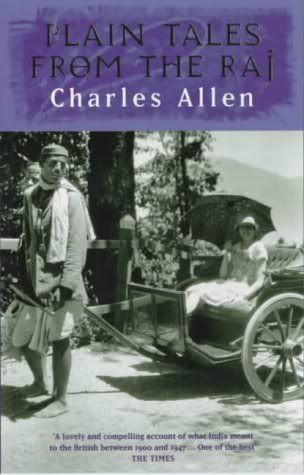
BBC R4 - Plain Tales From The Raj


Pass: bbc4free.blogspot.com


Seeing the popularity of our older post - More Plain Tales from the Raj, I decided to look around and find the first of this series, which I've uploaded here for your pleasure.

Enjoy!
________


Reminiscences of people who lived and worked in India from the late
19thC to Independence in 1947.

Interviewees came from a wide range of civilian and military departments.
Military  personnel range from the Commander in Chief of the Army in India
to Army privates. Civil servants of various ranks and members of the business
and commercial world.

Subjects include accommodation and living conditions, daily routine, social life,
recreation, health sanitation, the effects of India postings on family life, relations
between the British, other Europeans, Indians and Eurasians, events such as
riots and earthquakes, the fauna and landscape and political events.

Wednesday, 25 January 2012

Joseph Campbell - The Grail Legend


Download Here


Password: bbc4free.blogspot.com

Those already familiar with Joseph Campbell will know he was the foremost authority on the psychological reading of Mythology in the twentieth century. 

Most famous perhaps (the power of television!) for an American PBS series with Bill Moyers, though in my opinion, tapes of his regular lectures are really the best introduction. 

This is a MP3 rip of a tape series (hence the A and B sides for those who remember them) of a lecture on the Grail Legend. King Arthur's round table of equal Knights, going out to seek the Holy Grail is literally the stuff of Myth. Just remember, those setting out on their life's quest might do worse than remember the Knights of the Round Table, who on setting out, thought that it would be ignoble to travel in a group, each took their own turning into the forest "where he saw the forest was the thickest and there was no way or path...."

Tuesday, 24 January 2012

Max Brooks - World War Z


Password: bbc4free.blogspot.com


Max Brooks again proves that he is indeed the Romero of zombies in literature. excellent "history" of what happened in the future zombie invasion. read by Max Brooks and some others including Mark Hammill.

Sunday, 8 January 2012

BBC R4 - Yeti's Finger


High up a remote Himalayan Mountain in Nepal is a Buddhist monastery. The monks say there is no doubt yeti's roam the high forest, they see and hear them and they sometimes even attack people. The tantalising prospect of being the first to prove that this mythical ape like creature actually exists has been the goal many explorers - but the beast has always evaded capture. Then the discovery of a supposed yeti's hand kept in the monastery set off a remarkable chain of events that drew in a mountain explorer, an American oil tycoon, a Hollywood film star and a high tech lab for forensic science in Scotland. But is it a yeti?

Some people will go to extraordinary lengths to be the first. Tom Slick, an American oil tycoon, had the money and the desire to try to prove that yetis really do exist. He used his vast wealth to mount expeditions, sending off climber and explorer Peter Byrne into the most remote areas of the Himalayas to follow any leads he came across, and one seemed worth investigating further - a hand of a "yeti" in Pangboche monastery in Nepal. Byrne did a deal with the monks and replaced one finger of the hand with a human finger and arranged to have the yeti finger smuggled back to London.

How the finger actually reached London is a most bizarre tale that involved Hollywood film star James Stewart concealing it in his wife's lingerie case. And then the trail went cold. Slick died, Byrne went onto other things and the finger was lost to the world until it was found by chance in a forgotten collection of curiosities in the Royal College of Surgeons in London. New scientific techniques are now applied to see if the yeti's finger really is what it claims to be - or if not - what on earth has a finger like that?

Presenter: Matthew Hill
Producer: Mary Colwell
Editor: Julian Hector

Tuesday, 1 November 2011

BBC - A History of the World in 100 Objects - S1 - Making Us Human (2,000,000 - 9000 BC)


Neil MacGregor tells the story of two million years of our development through a hundred objects in the British Museum. We begin with the first that make us human.


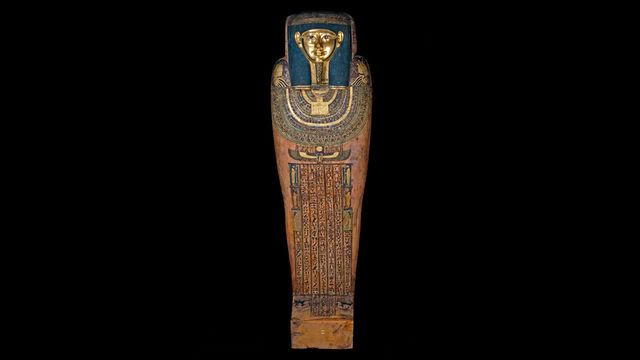
Episode 1 - Mummy of Hornedjitef (18 Jan 2010)

http://i931.photobucket.com/albums/ad155/CherokeeCapper/human1.jpgThe Director of the British Museum, Neil MacGregor, retells the history of human development from the first stone axe to the credit card, using 100 selected objects from the Museum.
At the age of eight, Neil visited the British Museum for the first time and came face to face with an object that fascinated and intrigued him ever since, an Egyptian mummy. Hornedjitef was a priest who died around 2,250 years ago, and he designed a coffin that, he believed, would help him navigate his way to the afterlife. Little did he know that this afterlife would be as a museum exhibit in London. This ornate coffin holds secrets to the understanding of his religion, society and Egypt's connections to the rest of the world.
Neil tells the story of Hornedjitef's mummy case with contributions from egyptologist John Taylor, Egyptian author Ahdaf Soueif and Indian economist and Nobel Prize winner Amartya Sen.
Producer: Anthony Denselow.


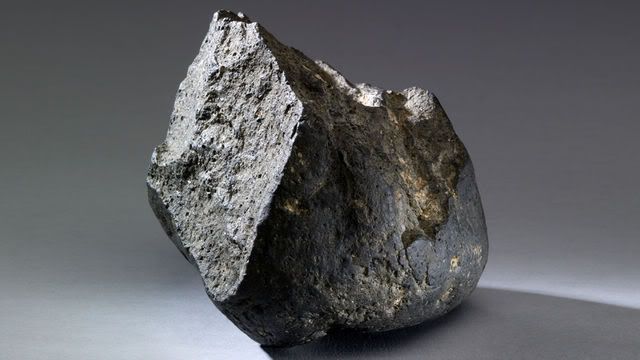
Episode 2 - Olduvai Stone Chopping Tool (19 Jan 2010)

http://i931.photobucket.com/albums/ad155/CherokeeCapper/human2-1.jpgThe Director of the British Museum, Neil MacGregor, retells the history of human development from the first stone axe to the credit card, using 100 selected objects from the Museum.
Neil goes back two million years to the Rift Valley in Tanzania, where a simple chipped stone marks the emergence of modern humans.
One of the characteristics that mark humans out from other animals is their desire for, and dependency on, the things they fashion with their own hands. Faced with the needs to cut meat from carcasses, early humans in Africa discovered how to shape stones into cutting tools. From that one innovation, a whole history of human development springs.
Neil tells the story of the Olduvai stone chopping tool with contributions from flint napper Phil Harding, Sir David Attenborough and African Nobel Prize winner Dr Wangeri Maathai.
Producer: Anthony Denselow.


Episode 3 - Olduvai Handaxe (20 Jan 2010)

http://www.bbc.co.uk/iplayer/images/episode/b00pwn7p_640_360.jpg
The Director of the British Museum, Neil MacGregor, retells the history of human development from the first stone axe to the credit card, using 100 selected objects from the Museum.
Neil follows early humans as they slowly begin to move beyond their African homeland, taking with them one essential item - a hand axe. In the presence of the most widely-used tool humans have created, Neil sees just how vital to our evolution this sharp, ingenious implement was and how it allowed the spread of humans across the globe.
Including contributions from designer Sir James Dyson and archaeologist Nick Ashton.
Producer: Anthony Denselow.


Episode 4 - Swimming Reindeer (21 Jan 2010)

http://www.bbc.co.uk/iplayer/images/episode/b00pwn7r_640_360.jpgThe Director of the British Museum, Neil MacGregor, retells the history of human development from the first stone axe to the credit card, using 100 selected objects from the Museum.
Found in France and dating back 13,000 years, this is a carving of two swimming reindeer - and it's not just the likeness that is striking. The creator of this carving was one of the first humans to express their world through art. But why did they do it?
Neil tells the story of the Swimming Reindeer and its place in the history of art and religion with contributions from the Archbishop of Canterbury, Dr Rowan Williams, and archaelogist Professor Steven Mithen.
Producer: Anthony Denselow.


Episode 5 - Clovis Spear Point (22 Jan 2010)

http://www.bbc.co.uk/iplayer/images/episode/b00pwn7t_640_360.jpgThe Director of the British Museum, Neil MacGregor, retells the history of human development from the first stone axe to the credit card, using 100 selected objects from the Museum.
Neil describes an object that dates from the earliest settlement of North America, around 13,000 years ago. It is a deadly hunting weapon, used by the first inhabitants of the Americas.
This sharp spearhead helps us understand how humans spread across the globe. By 11,000 BC humans had moved from north-east Asia into the uninhabited wilderness of north America; within 2,000 years they had populated the whole continent. How did these hunters live, and how does their Asian origin sit with the creation stories of modern-day Native Americans?
Including contributions from Michael Palin and American archaeologist Gary Haynes.
Producer: Anthony Denselow.

Wednesday, 21 September 2011

[BBC Radio 4] - The Dark Origins of Britain


The Dark Origins of Britain is a landmark series dealing with the greatest unresolved mystery in our history - how the modern nations of England, Wales and Scotland were born out of the chaos of the Dark Ages. In 400 AD, when Roman power collapsed in Britain, we were a province inhabited by Celtic peoples speaking a mixture of early Welsh and Latin. But only two hundred years later, the foundations of a new, Anglo-Saxon, English-speaking nation were being laid.

It was perhaps the biggest cultural transformation we've ever experienced. It set us on the road we were to follow to the present day. But even now, no-one knows how it happened, or why. The fifth and sixth centuries are truly the darkest period in our history - almost without written records or archaeological evidence.

An Anglo-Saxon brooch and a helmet from Sutton Hoo excavation.

In recent years historians and archaeologists have begun telling the story of the Dark Ages as it's never been told before. They've overturned our most basic assumptions about the period. For centuries we've taken it for granted that England was an Anglo-Saxon nation, and that England - and by extension, Wales - was created by a large-scale Anglo-Saxon invasion. But most experts now believe that that invasion never happened.

According to this new orthodoxy, there was no process of ethnic cleansing, as the contemporary chroniclers claimed and generations of children have been taught. Instead, the existing population of lowland Britain simply adopted Anglo-Saxon fashions, and learnt to speak English in a deliberate process of upward mobility. The Dark Origins of Britain investigates that extraordinary claim - with its profound implications for who we really are - with the help of Britain's leading specialists in the field.

Malmesbury Abbey iin Wilsthire. A monastry was established on the site in around 676 AD.


Programme 1:

...of the series goes to the heart of the debate over the origins of England and Wales. It uncovers amazing evidence drawn from the latest forensic techniques - such as analysis of tooth enamel - which has proved that the "Anglo-Saxon cemeteries" dotted across England actually contain very few Anglo-Saxons. But it also looks at new genetic research which appears to show the opposite; suggesting that hordes of marauding Anglo-Saxons did indeed come here after all. Finally, this programme considers whether contemporary notions of political correctness have influenced attempts to construct a non-violent version of our national origins.


Programme 2:

...investigates the Dark Origins of Scotland - and the mystery of the Picts, a people who dominated the north of Britain for a thousand years - and then apparently vanished. The Picts left no written documents but to this day they tantalise us with the hundreds of unique sculpted stones they scattered across the landscape, carved in a language of symbols that we're still struggling to interpret. Who were the Picts? Where did they go? And what legacy did they leave Scotland?


Programme 3:

...brings the story up to date. It looks at how the English, Welsh and Scots have returned again and again to plunder the Dark Ages to explain - and re-interpret - their origins. Why did the Norman kings of England promote the cult of King Arthur? Why is Queen Victoria portrayed in the National Portrait Gallery as an Anglo-Saxon maiden? And what are the origins of the modern-day fascination with all things Celtic? This programme examines the role of myth in the formation of our national identities.

Saturday, 17 September 2011

[BBC Radio 4] - The Blitz


As part of the Radio 4 Blitz season of programmes, Michael Portillo chairs a discussion with leading historians about the strategy and ongoing legacy of Nazi Germany's decision to bomb and destroy Britain's cities. 

The 7th of September 1940 marks the begining of nine months of aerial bombardment of Britain; an unprecedented seige experience which has been seared into the national psyche. London bore the brunt but Liverpool, Coventry, Plymouth and Belfast were amongst other cities badly damaged. 

In this discussion the homefront historian Juliet Gardiner, leading expert on Nazi Germany Sir Ian Kershaw and Terry Charman from the Imperial War Museum take a close look at the months leading up to the Blitz to understand Hitler's designs on Britain and how His Majesty's Government began preparing for the massive attack which quickly became an inevitability. We'll hear how volunteer forces were mobilized under extreme circumstances and how the fire service became the frontline fighters of the Blitz.

They'll discuss the true scale of the operation and the damage inflicted and also how it was judged and acted upon both in Hitler's High Command as well as in Churchill's War Cabinet. They'll also examine 'Blitz Spirit' to find out what it really consists of, how it has been reflected in popular culture and how well it is understood today.

[BBC Radio 4] - Hitler's Muslim Legions


It was after Germany's invasion of Yugoslavia and the Soviet Union in 1941 that Hitler's attention was first drawn to the potential for Muslim recruits to swell his ranks. For the many thousands of captured Soviet Muslims, the opportunity to serve in the Wehrmacht offered an escape from the brutality and starvation of the prison camps. Elsewhere, a major recruitment drive amongst Bosnian Muslims led to tens of thousands signing up for the Waffen-SS. Formed into exclusive Muslim units, these men fought in some of the most brutal campaigns of the entire war.

This programme investigates why Hitler and Himmler apparently cast aside their Nazi ideal of an Aryan master race, justifying the admission of Islam into their ranks. It asks what attracted these men to fight for the Third Reich, how they were treated by their German officers and how they conducted themselves in the bedlam of war. Were they hopeless soldiers who committed unspeakable atrocities; or did they fight bravely for the Fuhrer?

We examine the fate of these Muslims at the end of the war. With Hitler dead and the Third Reich defeated there was nothing to protect them, and most were killed as traitors.


Presented by Julian O'Halloran.
Producer: Jennifer Chryss
A Juniper production for BBC Radio 4.
Broadcast: Mon 26 Jul 2010

[BBC Radio 4] - The Cuban Missile Crisis As Seen From Moscow And Havana


What decisions were taken in the Kremlin and in Havana
during the 1962 crisis? Allan Little pieces together the story
and comes up with stuff I'm glad now I didn't know then.


BBC Description:

The US version of its role in the crisis is well documented
but until now the Soviet and Cuban sides of the story have
remained untold.

Using newly declassified documents from the KGB archive
and interviews with key Kremlin insiders, the BBC's former
Moscow Correspondent Allan Little analyses what Khrushchev
was doing placing missiles in Cuba and how he handled the
escalating crisis.


Presented by Alan Little
Broadcast October 23, 2002
Coded from tape at 128/44.1

Tuesday, 30 August 2011

[BBC Radio 4] - The Shipwrecked Bears


Gyles Brandreth investigates the mystery of three thousand missing teddy bears, the first ever made.

Three thousand teddy bears went missing in 1903, supposedly en route for New York from their native Germany. Bear expert and storyteller-par-excellence Gyles Brandreth attempts to discover what really happened to these earliest toy bears.

In 1902 the first ever toy bear was designed in Germany by Richard Steiff: Bär 55 PB, a lifelike bear with joints, a humped back and a snout. A New York toy company placed an order at the Leipzig Toy Fair in 1903 for three thousand of the bears - a novelty - to be ready in time for the Christmas market. The bears were made and packed up for shipment, but there is no record of them reaching their destination and none of this load of US-bound bears has ever been found. The templates, patterns and even photos of this bear exist but not even one sample was kept. One popular explanation is that there was a shipwreck and the bears had a watery end. All that is certain is that if one of these bears turned up now it would be 'open chequebook' time for certain museums and collectors.

Witty, magical and heart-warming, the documentary reveals fascinating detail behind the making of the bears, including a trip to the Steiff factory and a riffle through their detailed archives, as Gyles delights us with this little-known story, and imagines where water-logged bears might have washed up.


Producer.: Mary Ward-Lowery.
Broadcast: 27 July 2011
Duration: 27 min

Tuesday, 5 July 2011

[BBC Radio 3] - Leland's Travels


A fascinating story.

In 1533 Henry VIII commissioned John Leland to catalogue monastery libraries, ostensibly to discover what books were present in the realm. But, unknown to Leland, the real purpose of the visits was to identify which of the monasteries should be hit first in Henry VIII's upcoming still secret plan for 'dissolution of the monasteries'.

Leland seems to have gone mad when he realised that he'd been a cat's paw.

Complete with readings from Leland's journal of the visits.

Fascinating.


Presented by David Wallace
Readings by Jeremy Northam
Produced by Paul Quinn
Broadcast April 26, 2009

[BBC Radio 4] - George Orwell - 'Shooting An Elephant'

Look at that man...


George Orwell's tale about colonial officialdom in Burma, and the importance of keeping face.


Produced by Martin Jarvis
Broadcast July 25, 2010

[BBC Radio 4] - More Plain Tales From The Raj


Milligan Chota Sahib - The Indian Childhood Of Spike Milligan


'Plain Tales From The Raj' was a BBC R4 series broadcast in 1974 in which different aspects of life in British Empire India were described by people who experienced them.

Several years later the BBC made another similar series called 'More Plain Tales From The Raj' in which individuals were invited to make complete programs.

This edition is the one made by Spike Milligan, who was born into an army family in India.


Monday, 4 July 2011

[BBC Radio 4] - Grand Guignol


At the end of the nineteenth century, in the seediest quarter of Paris, a new theatre opened its doors offering a recipe of blood and terror - and soon the Grand Guignol was to become as big as an attraction in the city as the Eiffel Tower and the Arc de Triomphe. The success of an evening's performance - made up of a succession of short comedy and horror plays - was measured by how many members of the audience fainted, as they witnessed gougings, garrottings and gory murders on a nightly basis. 

After more than sixty years the theatre finally closed its doors, but only after helping influence the development of horror in the cinema, as well as introducing the phrase Grand Guignol into common parlance as a byword for shocking, blood-soaked terror. Sheila McClennon visits Paris to revisit the scene of this most shocking of theatre movements, and also comes to London to find out how the likes of Joseph Conrad and Noel Coward got involved in its English incarnation, which fought a staunch but unsuccessful battle with the censors at the beginning of the 1920s.


Broadcast on 17 Aug 2010
28mins

[BBC Radio 4] - Why Russia Spies


The Cold War is over. But some habits die hard. Since 2007 Russian nuclear bombers have been flying provocatively close to UK airspace, triggering interception by RAF fighters. The Royal Navy has encountered Russian 'hunter-killer' submarines. And as the recent discovery of a spy ring in the United States revealed, Russian agents remain active against the West. 

With remarkable access to Britain's military and intelligence worlds, Peter Hennessy examines the scale of Russian activity - and what it tells us about the Russia-NATO relationship.