Tuesday, 1 November 2011

BBC - A History of the World in 100 Objects - S1 - Making Us Human (2,000,000 - 9000 BC)


Neil MacGregor tells the story of two million years of our development through a hundred objects in the British Museum. We begin with the first that make us human.


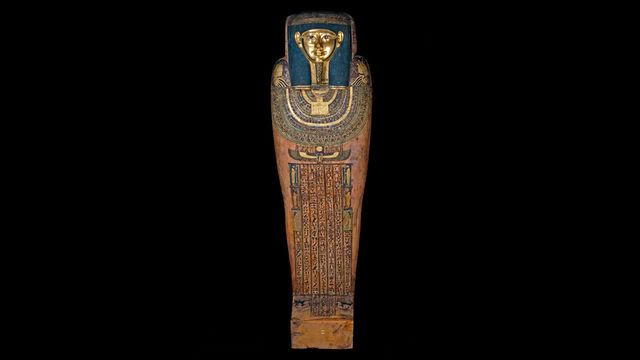
Episode 1 - Mummy of Hornedjitef (18 Jan 2010)
http://i931.photobucket.com/albums/ad155/CherokeeCapper/human1.jpgThe Director of the British Museum, Neil MacGregor, retells the history of human development from the first stone axe to the credit card, using 100 selected objects from the Museum.
At the age of eight, Neil visited the British Museum for the first time and came face to face with an object that fascinated and intrigued him ever since, an Egyptian mummy. Hornedjitef was a priest who died around 2,250 years ago, and he designed a coffin that, he believed, would help him navigate his way to the afterlife. Little did he know that this afterlife would be as a museum exhibit in London. This ornate coffin holds secrets to the understanding of his religion, society and Egypt's connections to the rest of the world.
Neil tells the story of Hornedjitef's mummy case with contributions from egyptologist John Taylor, Egyptian author Ahdaf Soueif and Indian economist and Nobel Prize winner Amartya Sen.
Producer: Anthony Denselow.


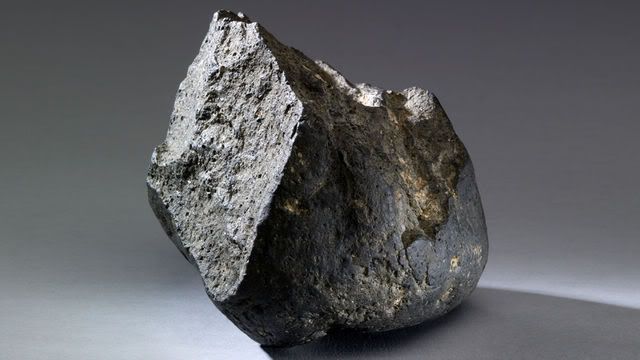
Episode 2 - Olduvai Stone Chopping Tool (19 Jan 2010)
http://i931.photobucket.com/albums/ad155/CherokeeCapper/human2-1.jpgThe Director of the British Museum, Neil MacGregor, retells the history of human development from the first stone axe to the credit card, using 100 selected objects from the Museum.
Neil goes back two million years to the Rift Valley in Tanzania, where a simple chipped stone marks the emergence of modern humans.
One of the characteristics that mark humans out from other animals is their desire for, and dependency on, the things they fashion with their own hands. Faced with the needs to cut meat from carcasses, early humans in Africa discovered how to shape stones into cutting tools. From that one innovation, a whole history of human development springs.
Neil tells the story of the Olduvai stone chopping tool with contributions from flint napper Phil Harding, Sir David Attenborough and African Nobel Prize winner Dr Wangeri Maathai.
Producer: Anthony Denselow.


Episode 3 - Olduvai Handaxe (20 Jan 2010)

http://www.bbc.co.uk/iplayer/images/episode/b00pwn7p_640_360.jpg
The Director of the British Museum, Neil MacGregor, retells the history of human development from the first stone axe to the credit card, using 100 selected objects from the Museum.
Neil follows early humans as they slowly begin to move beyond their African homeland, taking with them one essential item - a hand axe. In the presence of the most widely-used tool humans have created, Neil sees just how vital to our evolution this sharp, ingenious implement was and how it allowed the spread of humans across the globe.
Including contributions from designer Sir James Dyson and archaeologist Nick Ashton.
Producer: Anthony Denselow.


Episode 4 - Swimming Reindeer (21 Jan 2010)

http://www.bbc.co.uk/iplayer/images/episode/b00pwn7r_640_360.jpgThe Director of the British Museum, Neil MacGregor, retells the history of human development from the first stone axe to the credit card, using 100 selected objects from the Museum.
Found in France and dating back 13,000 years, this is a carving of two swimming reindeer - and it's not just the likeness that is striking. The creator of this carving was one of the first humans to express their world through art. But why did they do it?
Neil tells the story of the Swimming Reindeer and its place in the history of art and religion with contributions from the Archbishop of Canterbury, Dr Rowan Williams, and archaelogist Professor Steven Mithen.
Producer: Anthony Denselow.


Episode 5 - Clovis Spear Point (22 Jan 2010)

http://www.bbc.co.uk/iplayer/images/episode/b00pwn7t_640_360.jpgThe Director of the British Museum, Neil MacGregor, retells the history of human development from the first stone axe to the credit card, using 100 selected objects from the Museum.
Neil describes an object that dates from the earliest settlement of North America, around 13,000 years ago. It is a deadly hunting weapon, used by the first inhabitants of the Americas.
This sharp spearhead helps us understand how humans spread across the globe. By 11,000 BC humans had moved from north-east Asia into the uninhabited wilderness of north America; within 2,000 years they had populated the whole continent. How did these hunters live, and how does their Asian origin sit with the creation stories of modern-day Native Americans?
Including contributions from Michael Palin and American archaeologist Gary Haynes.
Producer: Anthony Denselow.

[Audiobook] [BBC Radio 4] - The House on the Borderland - by William Hope Hodgson


In 1877, two gentlemen, Messrs Tonnison and Berreggnog, head into Ireland to spend a week fishing in the village of Kraighten. While there, they discover in the ruins of a very curious house a diary of the man who had once owned it. Its torn pages seem to hint at an evil beyond anything that existed on this side of the curtains of impossibility. 

This is a classic novel that worked to slowly bridge the gap between the British fantastic and supernatural authors of the later 19th century and modern horror fiction. Classic American horror writer H. P. Lovecraft lists this and other works by Hodgson among his greatest influences.


Author's Introduction to the Manuscript: 
Many are the hours in which I have pondered upon the story that is setforth in the following pages. I trust that my instincts are not awrywhen they prompt me to leave the account, in simplicity, as it washanded to me.
And the MS. itself--You must picture me, when first it was given into mycare, turning it over, curiously, and making a swift, jerky examination.A small book it is; but thick, and all, save the last few pages, filledwith a quaint but legible handwriting, and writ very close. I have thequeer, faint, pit-water smell of it in my nostrils now as I write, andmy fingers have subconscious memories of the soft, "cloggy" feel of thelong-damp pages.
I read, and, in reading, lifted the Curtains of the Impossible thatblind the mind, and looked out into the unknown. Amid stiff, abruptsentences I wandered; and, presently, I had no fault to charge againsttheir abrupt tellings; for, better far than my own ambitious phrasing,is this mutilated story capable of bringing home all that the oldRecluse, of the vanished house, had striven to tell.
Of the simple, stiffly given account of weird and extraordinary matters,I will say little. It lies before you. The inner story must be uncovered,personally, by each reader, according to ability and desire. And evenshould any fail to see, as now I see, the shadowed picture and conceptionof that to which one may well give the accepted titles of Heaven and Hell;yet can I promise certain thrills, merely taking the story as a story.

WILLIAM HOPE HODGSON December 17, 1907

Read by Jim Norton

Extra:
In 2003 DC Comics’ mature reader imprint Vertigo published a 96-page color graphic-novel adaptation of The House on the Borderland. The story was adapted by Simon Revelstroke and the art was done by comic book artist Richard Corben. The book is available in both soft and hardcover and contains an introduction by British comic writer and artist Alan Moore. 

If anyone has this comic, please send me a link in the comment box, I'd love to read it!


Monday, 10 October 2011

[Audiobook] [BBC Radio 4] - HP Lovecraft - The Shadow Over Innsmouth


Download Here

Password: bbc4free.blogspot.com


Coming up to All Hallows Eve, lend an ear to this great reading of Lovecraft that will CHILL YE TAE THE BONE!

Synopsis:
Young historian Robert Olmstead journeys to the mysterious, shunned town of Innsmouth in New England. Read by Richard Coyle.

 5 x 30 min episodes

First broadcast: BBC Radio 4 Extra, Mon, 3 Oct 2011

Thursday, 22 September 2011

[Audiobook] - Classic Tales Of Horror - Series 1


I'd like to mention that among these great stories is a wonderful gem - The Man In The Bell.
I found every bit of this story truly imaginative, it held me in its grasp till the end. Beautiful.


Episode 1: An Englishman spends a chilling night in a spooky bungalow in India. Rudyard Kipling's haunting tale read by Richard Pasco.


Episode 2: A church bell ringer's trip up to the Belfry has terrifying consequences. WE Aytoun's chilling tale read by Patrick Malahide.


Episode 3: A man is terrorised by hideous apparitions in a haunted Italian villa. EF Benson's tale is read by Patrick Malahide.


Episode 4: An Alderman leases a property for his family unaware that it's haunted. J Sheridan Le Fanu's tale read by Richard Pasco.


Episode 5: A mysterious print reveals a tragic tale of rural revenge. MR James' short story read by Robin Bailey.


Episode 6: A scientist claims to have discovered a Fountain of Youth. Nathanial Hawthorne's comically creepy yarn, read by Nicky Henson.


Episode 7: This classic Edgar Allen Poe story follows Prince Prospero's eager attempts to avoid the Red Death. Edgar Allen Poe story read by Patrick Malahide.


Episode 8: Wilkie Collins' unnerving story of a young man, flushed and foolish with gambling success and champagne. Wilkie Collins read by Robin Baile Classic


Short Horror Stories: 8 x 15 - 40 Minute Episodes

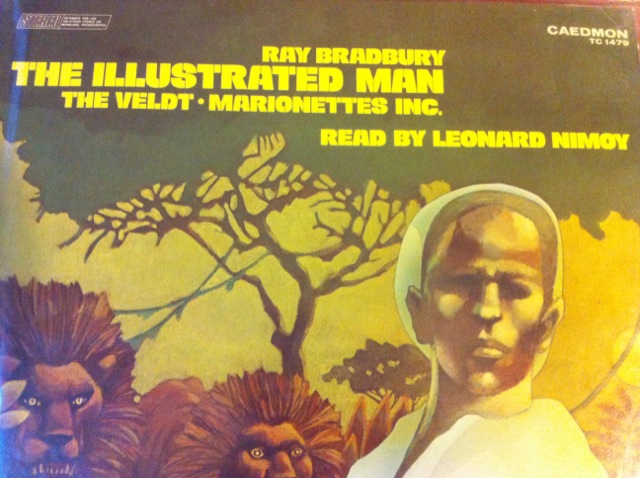
[Audiobook] Leonard Nimoy Reads


Four rare Caedmon recordings read by Leonard Nimoy himself. These stories are from Robert A. Heinlein, Ray Bradbury & H.G. Wells respectively and they are a real treat.


Robert A. Heinlein's:
Gentlemen Be Seated

Ray Bradbury's: 
Usher II  
There Will Come Soft Rains
The Veldt
Marionettes Inc

HG Well's: 
The War Of The Worlds


Enjoy!

Wednesday, 21 September 2011

[BBC Radio 3] Documentary - Chopin


Pianist Piers Lane presents five essays to mark Fredrick Chopin's 200th anniversary.


Part 1 - Chopin's relationship with Romantic music.

Part 2 - Piano forms innovated by Chopin.

Part 3 - Chopin as piano teacher.

Part 4 - Interpretations of Chopin's music.

Part 5 - Global veneration of Chopin.


Broadcast in 'The Essay' Series
Presented by Piers Lane
Produced by Jo Wheeler
Broadcast March 1-5, 2010

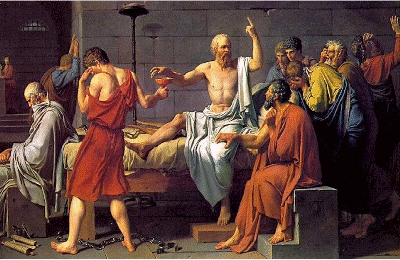
[BBC Radio 3] - Sebastian Baczkiewicz's 'The Trial And Death Of Socrates'


The play draws on Plato and Xenophon's accounts of Socrates'
trial and execution, but also includes an investigation into
the concurrent death of Meletus, Socrates' prime accuser.

Cast:
Socrates - Joss Ackland
Thrasybulis - Michael Feast
Josias - Greg Hicks
Crito - David Calder
Anytus - Tim McInnerny
Meletus - Joseph Kloska
Xanthippe - Cait Davis
Almathea - Liza Sadovy
Euthyphro - Peter Marinker
Kastor - Trevor Allan Davies
Announcer - Ben Onwukwe
Lysander - Ben Crowe
Guard/Official - Chris Pavlo
Woman - Liz Sutherland

Directed by Jeremy Mortimer
Broadcast February 10, 2008

[BBC Radio 4] - The Dark Origins of Britain


The Dark Origins of Britain is a landmark series dealing with the greatest unresolved mystery in our history - how the modern nations of England, Wales and Scotland were born out of the chaos of the Dark Ages. In 400 AD, when Roman power collapsed in Britain, we were a province inhabited by Celtic peoples speaking a mixture of early Welsh and Latin. But only two hundred years later, the foundations of a new, Anglo-Saxon, English-speaking nation were being laid.

It was perhaps the biggest cultural transformation we've ever experienced. It set us on the road we were to follow to the present day. But even now, no-one knows how it happened, or why. The fifth and sixth centuries are truly the darkest period in our history - almost without written records or archaeological evidence.

An Anglo-Saxon brooch and a helmet from Sutton Hoo excavation.

In recent years historians and archaeologists have begun telling the story of the Dark Ages as it's never been told before. They've overturned our most basic assumptions about the period. For centuries we've taken it for granted that England was an Anglo-Saxon nation, and that England - and by extension, Wales - was created by a large-scale Anglo-Saxon invasion. But most experts now believe that that invasion never happened.

According to this new orthodoxy, there was no process of ethnic cleansing, as the contemporary chroniclers claimed and generations of children have been taught. Instead, the existing population of lowland Britain simply adopted Anglo-Saxon fashions, and learnt to speak English in a deliberate process of upward mobility. The Dark Origins of Britain investigates that extraordinary claim - with its profound implications for who we really are - with the help of Britain's leading specialists in the field.

Malmesbury Abbey iin Wilsthire. A monastry was established on the site in around 676 AD.


Programme 1:

...of the series goes to the heart of the debate over the origins of England and Wales. It uncovers amazing evidence drawn from the latest forensic techniques - such as analysis of tooth enamel - which has proved that the "Anglo-Saxon cemeteries" dotted across England actually contain very few Anglo-Saxons. But it also looks at new genetic research which appears to show the opposite; suggesting that hordes of marauding Anglo-Saxons did indeed come here after all. Finally, this programme considers whether contemporary notions of political correctness have influenced attempts to construct a non-violent version of our national origins.


Programme 2:

...investigates the Dark Origins of Scotland - and the mystery of the Picts, a people who dominated the north of Britain for a thousand years - and then apparently vanished. The Picts left no written documents but to this day they tantalise us with the hundreds of unique sculpted stones they scattered across the landscape, carved in a language of symbols that we're still struggling to interpret. Who were the Picts? Where did they go? And what legacy did they leave Scotland?


Programme 3:

...brings the story up to date. It looks at how the English, Welsh and Scots have returned again and again to plunder the Dark Ages to explain - and re-interpret - their origins. Why did the Norman kings of England promote the cult of King Arthur? Why is Queen Victoria portrayed in the National Portrait Gallery as an Anglo-Saxon maiden? And what are the origins of the modern-day fascination with all things Celtic? This programme examines the role of myth in the formation of our national identities.

Saturday, 17 September 2011

[BBC Radio 4] - The Blitz


As part of the Radio 4 Blitz season of programmes, Michael Portillo chairs a discussion with leading historians about the strategy and ongoing legacy of Nazi Germany's decision to bomb and destroy Britain's cities. 

The 7th of September 1940 marks the begining of nine months of aerial bombardment of Britain; an unprecedented seige experience which has been seared into the national psyche. London bore the brunt but Liverpool, Coventry, Plymouth and Belfast were amongst other cities badly damaged. 

In this discussion the homefront historian Juliet Gardiner, leading expert on Nazi Germany Sir Ian Kershaw and Terry Charman from the Imperial War Museum take a close look at the months leading up to the Blitz to understand Hitler's designs on Britain and how His Majesty's Government began preparing for the massive attack which quickly became an inevitability. We'll hear how volunteer forces were mobilized under extreme circumstances and how the fire service became the frontline fighters of the Blitz.

They'll discuss the true scale of the operation and the damage inflicted and also how it was judged and acted upon both in Hitler's High Command as well as in Churchill's War Cabinet. They'll also examine 'Blitz Spirit' to find out what it really consists of, how it has been reflected in popular culture and how well it is understood today.

[BBC Radio 4] - Hitler's Muslim Legions


It was after Germany's invasion of Yugoslavia and the Soviet Union in 1941 that Hitler's attention was first drawn to the potential for Muslim recruits to swell his ranks. For the many thousands of captured Soviet Muslims, the opportunity to serve in the Wehrmacht offered an escape from the brutality and starvation of the prison camps. Elsewhere, a major recruitment drive amongst Bosnian Muslims led to tens of thousands signing up for the Waffen-SS. Formed into exclusive Muslim units, these men fought in some of the most brutal campaigns of the entire war.

This programme investigates why Hitler and Himmler apparently cast aside their Nazi ideal of an Aryan master race, justifying the admission of Islam into their ranks. It asks what attracted these men to fight for the Third Reich, how they were treated by their German officers and how they conducted themselves in the bedlam of war. Were they hopeless soldiers who committed unspeakable atrocities; or did they fight bravely for the Fuhrer?

We examine the fate of these Muslims at the end of the war. With Hitler dead and the Third Reich defeated there was nothing to protect them, and most were killed as traitors.


Presented by Julian O'Halloran.
Producer: Jennifer Chryss
A Juniper production for BBC Radio 4.
Broadcast: Mon 26 Jul 2010

[BBC Radio 4] - The Cuban Missile Crisis As Seen From Moscow And Havana


What decisions were taken in the Kremlin and in Havana
during the 1962 crisis? Allan Little pieces together the story
and comes up with stuff I'm glad now I didn't know then.


BBC Description:

The US version of its role in the crisis is well documented
but until now the Soviet and Cuban sides of the story have
remained untold.

Using newly declassified documents from the KGB archive
and interviews with key Kremlin insiders, the BBC's former
Moscow Correspondent Allan Little analyses what Khrushchev
was doing placing missiles in Cuba and how he handled the
escalating crisis.


Presented by Alan Little
Broadcast October 23, 2002
Coded from tape at 128/44.1

[BBC Radio 4] - Libraries, Labyrinths, Borges, And Me


Peter White is very interested in Jorge Luis Borges' work. He travels to Buenos Aires to find out what why Borges seems to be more quoted than read, and to use his own blindness to bring new perspective Borges' his life and work.
.

Presented by Peter White
Reader Peter Woolf
Produced by Mark Smally
Broadcast May 19, 2009